
Digital Transformation and Security: Strategic IoT Management for Enhanced Safety
The Management of the Internet of Things (IoT)
This article focuses on the management of IoT, highlighting security’s role in digital transformation.
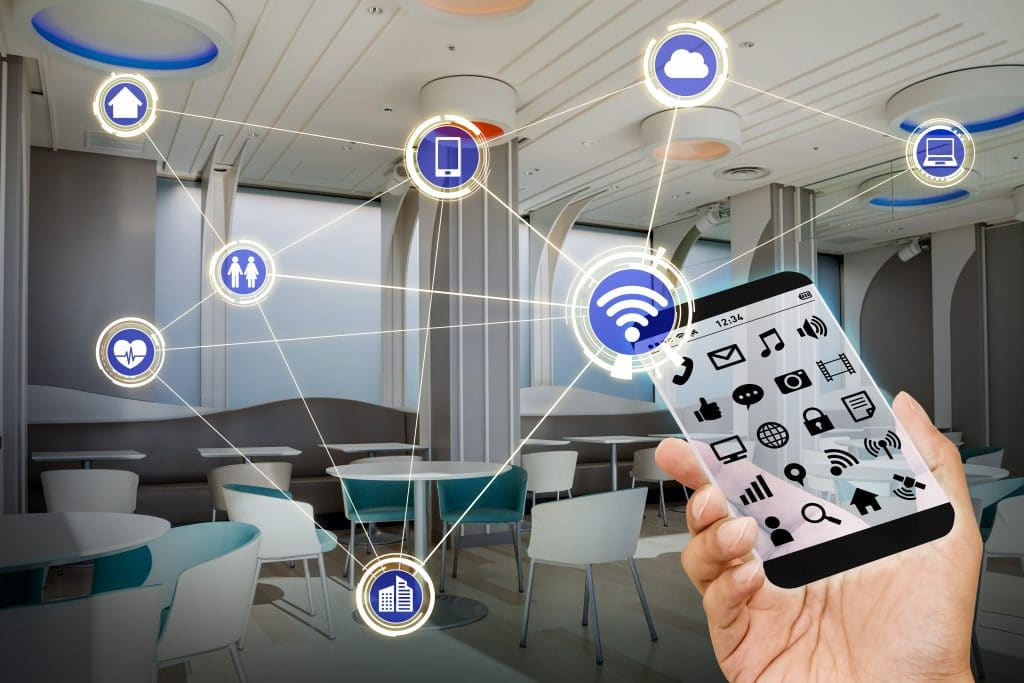
An IoT Primer
At the core of a robust IoT strategy is providing the ability to install and manage devices on a large scale, but device management is just one of five functions organizations typically are seeking to achieve. The others are lifecycle management, work orders and ticketing, reporting, and lowering security infrastructure.
Device Management
Determining how to manage the myriad of devices in a security system is a critical decision because when you begin to network things like cameras, your vulnerability increases. You can use middleware to facilitate systemwide communication or make your devices IoT aware.
The device management process includes five important components:
- Device Authentication—the act of securely establishing the identity of a device to ensure it can be trusted.
- Provisioning—the process when a device is first plugged in and connected to the local network; it “calls home,” and based on the credentials or other information such as model and serial number, it might receive further configuration data .
- Configuration and Control Support—the act of delivering attributes such as its name, location, and application-specific settings such as the amount of time between sending position messages and the ability to remotely reset a device to achieve a known-good state, recover from errors, and implement new configuration changes.
- Monitoring and Diagnostics—the ability to minimize the impact of any device downtime due to software bugs or other unforeseen operational problems, which includes downloading program logs to troubleshoot and solve issues.
- Software Maintenance and Updates—essential to securely update and maintain remote devices, fix application bugs, add simple feature enhancements, or update the main running application software without touching the platform firmware.
Lifecycle Management
Determining the lifecycle of security system components is critical to ensure there is no lag time when they need to be replaced. This includes keeping track of data such as where they were procured when they were deployed, what kind of warranty they have, their repair history, and their replacement cost.
Lifecycle management also focuses on the importance of being aware of design and development challenges that can arise from IoT. For instance, more flexible development methods that enable an efficiently deployed environment on a global scale must consider ease of integration. In addition, security is a paramount concern in IoT development. A robust security strategy must be factored in across the application lifecycle at the design stage.
Testing and debugging, deployment, and decommissioning also need to be taken into consideration under the lifecycle management umbrella. Perhaps the most critical value proposition of an IoT system is the ability to unlock and extract data from devices, aggregate, analyze, and make business decisions based on insights realized.
Work Orders and Ticketing
IoT can be invaluable when dealing with changes to a device state, as having an integrated work order solution and knowledge base with FAQs can result in streamlining the work order generation process. This may facilitate the ability to move tickets between categories, assign tickets to specific staff members, link or split requests based on their subject, and do a mass reply to multiple requests. Integrating alarm response with work order ticketing is rare today, but we consider it to be a solid strategy with next-generation solutions.
Reporting
Integrated reporting in the IoT enterprise is extremely important. When something happens, you need to know why. Plus, having reporting technology that is ubiquitous and accessible anywhere makes it easier to justify expenditures and will help make a case for future spending. The real-time data ingest process should feed right into the same reporting engine.
Lower Security Infrastructure
Embracing the power of IoT has the potential to eliminate expensive infrastructure while enhancing functionality. For instance, access control can be implemented by leveraging cognitive services like facial recognition, biometrics, or other next–generation modalities to eliminate the plastic credential and card reader, and maybe even the presence of guards. In addition, relying on the power of cloud platform services may eliminate a middle application and break the traditional model.
Better Compliance and IT Security Tools
One of the biggest challenges facing organizations today is that most security systems devices are not IoT-compliant. Many of the legacy IT-based protocols like SNMP are not robust enough to support a more contemporary IoT strategy.
Forward-thinking organizations should be asking themselves how they can achieve better compliance by leveraging current IT tools to help with the following concerns:
- Log retention, management, and analysis—all in one platform .
- Analyzing logs automatically to detect malicious behavior directed at in-scope devices .
- Active and passive asset discovery and monitoring .
- Network and host IDs .
- Flexible reporting and dashboard .
- Auditor-ready report templates.
- Role-based access control for customized views.
- Custom report queries and fast searches .
The Takeaway
What are the first steps towards an IoT strategy for your organization’s security system ecosystem?
Start with an assessment of where you are today and follow that up with a feasibility study. Remember, your ROI has two components—monetary and efficiency. If you’ve uncovered a device vulnerability that requires 10,000 widgets to be updated, imagine the difference between having to do each one individually or having the ability to do a bulk update.
Uncover the integral role of physical security in the digital transformation landscape and process of Departmental Collaboration, also Take proactive measures to secure your digital infrastructure with insights on administration and effective device mitigation.
About Atriade
Atriade is a trusted security consulting firm with decades of experience delivering tailored security solutions. We specialize in security system design for access control, perimeter protection, video surveillance, visitor management, and other advanced physical security technologies.
Our expertise also extends beyond system design to include security master planning, program development, risk assessments, professional services, and end-to-end project management.
For more than 20 years, we have partnered with Fortune 50 companies, Ivy League universities, and leading technology firms in Silicon Valley to help them navigate complex security challenges with a strategic, forward-thinking approach.
Visit us online at Atriade.com
Connect with us on LinkedIn
Subscribe to our LinkedIn Newsletter Take A Risk
Frequently Asked Questions
What core components should be included in an IoT device management strategy for physical security systems?
An effective IoT device management process includes device authentication, provisioning, configuration and control support, monitoring and diagnostics, and software maintenance and updates. Addressing each component reduces vulnerability as devices are networked. Without structured authentication, monitoring, and update controls, organizations increase exposure, operational instability, and lifecycle risk across distributed security environments.
Why is lifecycle management critical in an IoT-enabled security ecosystem?
Lifecycle management ensures there is no lag when components require replacement and includes tracking procurement data, deployment dates, warranties, repair history, and replacement cost. It also incorporates testing, debugging, deployment, and decommissioning. Without disciplined lifecycle oversight, organizations risk unsupported devices, budgeting surprises, and compliance gaps tied to aging infrastructure.
How can integrated work orders and ticketing improve IoT security operations?
An integrated work order and ticketing solution streamlines work order generation, categorization, ticket assignment, and bulk updates. Linking IoT device state changes to structured workflows improves accountability and response consistency. This reduces operational friction, supports documentation requirements, and strengthens coordination across teams responsible for maintaining security system performance.
What reporting capabilities are necessary to support IoT security compliance and oversight?
Effective IoT reporting should include log retention and analysis in one platform, automated detection of malicious behavior, asset discovery and monitoring, network and host IDs, flexible dashboards, auditor-ready templates, role-based access control, and custom queries. These capabilities improve transparency, justify expenditures, and help demonstrate compliance across regulated environments.
What are the first steps in developing an IoT strategy for a security system ecosystem?
Organizations should begin with an assessment of their current state followed by a feasibility study. ROI considerations include both monetary and efficiency gains, particularly when addressing large-scale device vulnerabilities. Without structured assessment and feasibility validation, IoT investments risk fragmentation, inconsistent deployment, and limited long-term operational value.